From the blog
Give Your Mind Somewhere to Walk
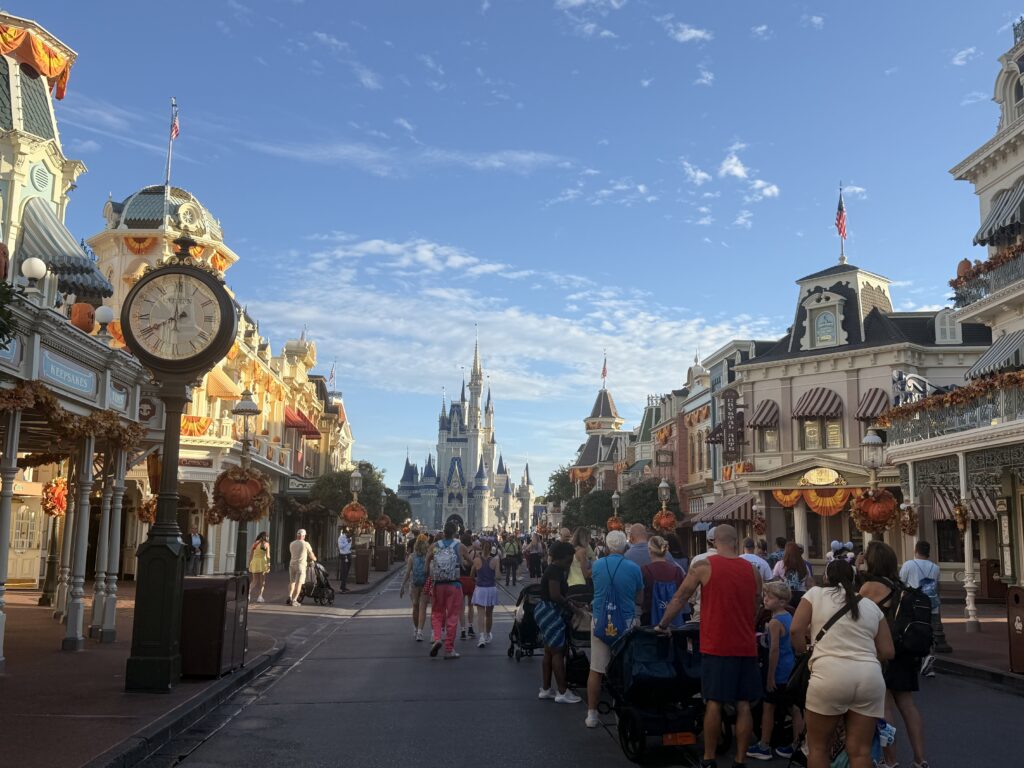
During my PET scan last week, I wasn’t thinking only about the IV in my arm or the medication that was making my chest hurt.
I was walking into the Magic Kingdom.
I was also paying attention to my symptoms—I just wasn’t letting them become the only thing my brain could think about.
That probably sounds strange if you’ve never experienced a stressful medical procedure. People often think coping techniques are about distracting yourself or pretending you’re somewhere else. For me, it’s neither of those things.
It’s about giving my brain somewhere else to direct its attention.
I’ve learned over the years that the best time to prepare for a stressful medical procedure isn’t when you’re already lying on the procedure table. It’s long before you ever walk through the hospital doors.
One of the techniques that has helped me the most is creating a place that feels completely familiar—a place I know so well that my mind can walk through it without ever leaving the procedure room.
For me, that place is the Magic Kingdom.
The important part isn’t that it’s Disney. The important part is that I know it so well that I don’t just picture it—I can travel through it.
I don’t start on Main Street. I start at the very beginning. I step off the bus and look across Seven Seas Lagoon toward the Grand Floridian. I walk toward the security checkpoint and hear the Cast Members greeting guests. I make my way to the entrance, touch my MagicBand to the Mickey reader, hear the familiar chime, and watch the fingerprint scanner glow purple before I continue through the turnstiles. Then I walk beneath the train station, already knowing exactly what waits on the other side.
As I emerge onto Main Street, U.S.A., I notice the flowers in Town Square. I smell the Confectionery before I ever reach it. I look up at the names in the windows and read them one by one. I know where every shop is, where I would stop for a picture, and which direction I would turn if I wanted to head toward Adventureland, Frontierland, or Tomorrowland. I can picture the pavement beneath my feet, the music playing overhead, and Cinderella Castle waiting at the end of the street.
Every one of those details is intentional.
People sometimes assume the goal is simply to imagine somewhere pleasant, but that’s not what I’m trying to do. I’m giving my brain work to do. I ask it to remember every sight, every sound, every smell, every landmark, and every step in the journey. What’s around the next corner? Which shop comes next? What’s written in the windows? What music is playing here? What would I see if I turned my head?
The more specific I become, the more my brain focuses on remembering instead of worrying.
What I appreciate most about this technique is that it doesn’t make me tune out what’s happening around me. In fact, I think it’s important not to.
If I’m having chest pain, difficulty breathing, dizziness, or another symptom during a procedure, I want to recognize it and tell my healthcare team. Those symptoms may be important. My goal isn’t to distract myself so completely that I miss something meaningful.
Instead, my walk through the Magic Kingdom helps me stay calm enough to notice what’s happening without immediately catastrophizing every sensation. It creates just enough distance that I can think, I’m having chest pain. I should let them know, instead of, Something terrible is happening.
For me, that’s the real value of the exercise. It doesn’t take me away from the procedure. It keeps me grounded enough to participate in it. I can answer questions, report my symptoms accurately, and advocate for myself without fear becoming the loudest voice in the room.
Visualization is only one piece of coping, though. I’ve also learned to ask questions. If I don’t understand what’s happening, I ask. If I want to know what comes next, I ask. Uncertainty often creates more anxiety than the procedure itself, and a good healthcare team wants you to understand what’s happening.
I’ve also learned to speak up if something doesn’t feel right. Maybe the blood pressure cuff is painfully tight. Maybe your arm is in an awkward position. Maybe you’re cold, or the room is too noisy, or you’re becoming overwhelmed. We sometimes worry about being “good patients” and don’t want to inconvenience anyone, but your healthcare team can’t fix a problem they don’t know exists. You are allowed to ask for a blanket. You are allowed to ask for a pillow. You are allowed to ask someone to explain what they’re doing. You are allowed to say, “I’m feeling anxious.”
Creating a place like this doesn’t have to involve the Magic Kingdom. It could be a favorite beach, a hiking trail, your grandparents’ house, or your own backyard. The location doesn’t matter. What matters is choosing somewhere so familiar that you can walk through it in exquisite detail.
Build that place before you ever need it. Visit it when you’re calm. Notice things you’ve never paid attention to before. Learn the route so well that your mind can travel it effortlessly. The richer those memories become, the more your brain has to work with when you’re under stress.
Medical procedures are never easy, especially if you’ve had difficult experiences in the past. We can’t always control what happens during them, but we can prepare ourselves for how we’ll respond.
Sometimes that preparation is as simple as giving your mind somewhere else to walk while your body is doing something difficult.